
Generic selectors
Exact matches only
Search in title
Search in content
Post Type Selectors

Legal Obligations and Laws Surrounding Trees on Your Land
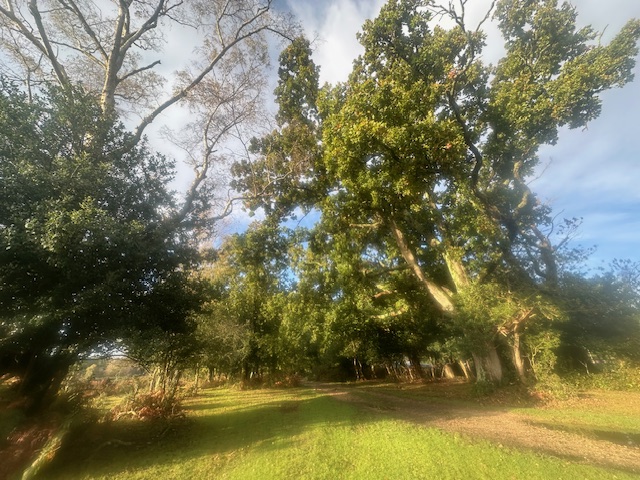
 

Trees form one of the most important views across the landscape and combined with their environmental benefits, are to be treasured. With carbon credits being brought to the fore in today’s climate change battle, woodland has become hot property. Even the tree in your back garden could be protected so make sure you understand your obligations.

Owning land with trees brings a host of legal responsibilities. Trees, while an asset to the environment, can become the focus of legal disputes, particularly when it comes to pruning, removal, or management. Below, the Godwin’s team outline the main legal obligations and duties for landowners regarding trees, including specific laws on Tree Preservation Orders (TPOs), conservation areas, ancient woodland, and liability surrounding trees.

What is a tree a preservation order? (TPOs)

Tree Preservation Order (TPO) is a legal mechanism used by local planning authorities (LPAs) in the UK to protect specific trees or groups of trees that provide significant environmental or aesthetic value.

  1. What does a TPO mean for landowners?
    • If a tree on your land is protected by a TPO, you cannot cut it down, prune it, or carry out any other work without prior written consent from the LPA.
    • Unauthorised work on a TPO-protected tree can result in fines of up to £20,000 or, for more serious offenses, unlimited fines in the Crown Court.
  2. How do I check if a tree has a TPO?
    • During the conveyancing process we can check if the trees on the land you are buying are protected by a TPO which are shown as a local land charge on the Local Search.
    • Post purchase we are able to check online to ascertain if specific trees on your land have the protection.
  3. Can you prune a tree with a TPO?
    • Pruning is permissible, but it requires written consent. Applications must include detailed information on the proposed work and justification (e.g., safety concerns or disease). Emergency works, such as those required to remove a dangerous limb, may be carried out without prior consent, but you must notify the LPA afterwards.


Are there restrictions on trees in conservation areas?

Trees located in conservation areas receive automatic protection, even if they are not subject to a specific TPO.

  1. What are Conservation areas?
    • These are areas designated for their special architectural or historic interest. Trees in these areas contribute to their character and are protected under Section 211 of the Town and Country Planning Act 1990.
  2. Obligations for landowners in Conservation areas
    • You must notify your local council at least six weeks before carrying out work on a tree with a trunk diameter exceeding 75mm (measured at 1.5 meters above ground level). This notice is called a “Section 211 Notice.”
    • The council may respond by issuing a TPO if it deems the tree worthy of long-term protection.
  3. Penalties for unauthorised work
    • As with TPO-protected trees, unauthorised work on a tree in a conservation area can result in significant fines.

Are trees in ancient woodland and veteran trees protected?

  1. What is Ancient Woodland?
    • Ancient woodland refers to areas continuously wooded since at least 1600 in England. These areas are irreplaceable due to their biodiversity and historical significance.
    • Veteran trees, though not necessarily part of ancient woodland, are mature specimens with significant ecological or historical value.
  2. Legal Protections for ancient woodland and veteran trees
    • Ancient woodland is protected under the National Planning Policy Framework (NPPF). Development impacting these trees is only permitted in exceptional circumstances.
    • Local planning policies may also provide additional protections.
  3. Managing trees in ancient woodland
    • Any work must comply with environmental laws, such as the Wildlife and Countryside Act 1981, which protects nesting birds and bats living in trees. You may also need to consult an ecologist.

Are landowners responsible for trees overhanging public highways and footpaths?

  1. Landowner Duties
    • Landowners are legally obligated to ensure that trees on their land do not pose a hazard to public highways, pavements, or rights of way.
    • Overhanging branches must be pruned to maintain clearances:
      • 5.2 meters above roads.
      • 2.5 meters above pavements.
  2. Enforcement by Local Authorities
    • If a tree poses a hazard (e.g., obstructing visibility or causing damage), the local authority can issue a notice requiring remedial action. Failure to comply may result in the council undertaking the work and charging the landowner.
  3. It is very important as a landowner that you  have third party insurance to cover falling trees which could cause an accident


Are trees in the garden of a listed building protected?

If your property is a listed building, additional restrictions apply to trees on your land.

  1. Listed building status
    • The setting of a listed building, including its garden, is protected by law. Alterations, including tree removal, must preserve the character and setting of the property.
  2. Can you cut down a tree in a garden of a listed building?
    • You may need both planning permission and listed building consent to remove or prune a tree, particularly if it contributes to the historic or aesthetic value of the property.
    • Trees in conservation areas or with TPOs are subject to additional layers of protection.
  3. Consultation with authorities
    • Always consult your local planning authority and, if applicable, heritage organisations to determine the necessary permissions before undertaking any work.

How Godwins can help

Godwins can help you acquire land which may be dotted with trees, or indeed your very own parcel of woodland. We raise specialist enquiries and searches so that you know whether the trees on your property are protected.


Please get in touch with the team if you would like legal advice on trees on your property.
Selling part of a farm while retaining the farmhouse

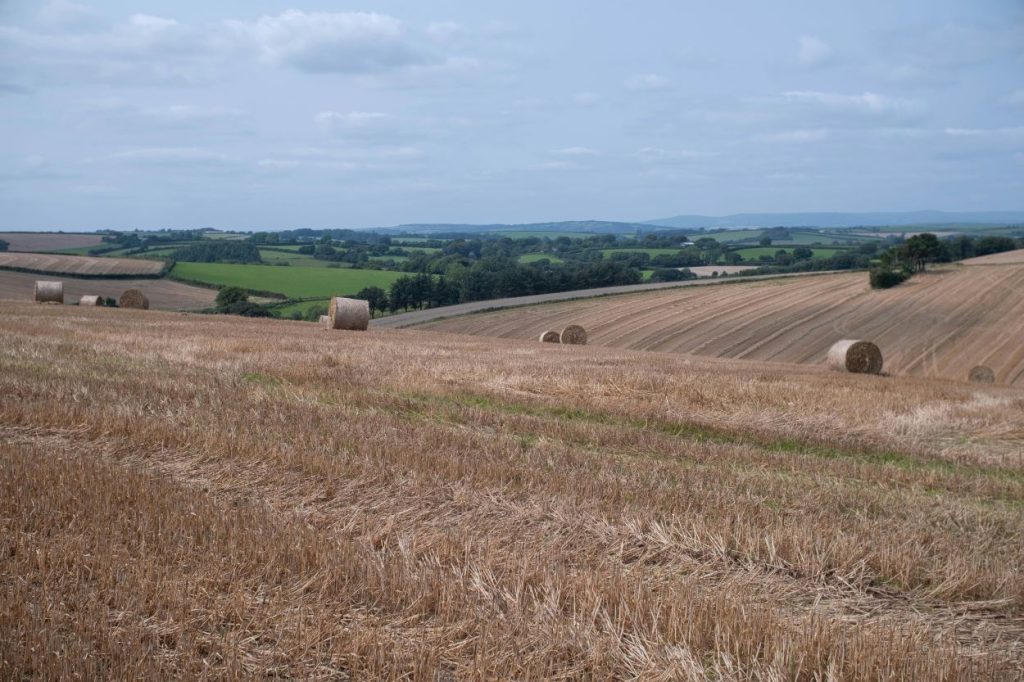
Are you thinking about selling a portion of a farm while retaining a parcel, perhaps the farmhouse? With agricultural values holding strong versus other property markets you may be considering a sale off as a good option for you. This can be a complex process with numerous legal, financial and indeed personal implications. Before embarking on a sale,  Associate Member Kerry Dovey shares  some considerations.


Legal and Practical Issues

Shared Services

When part of the farm is sold, determining the use and maintenance of shared services such as water, electricity, and drainage becomes crucial. The retained farmhouse may rely on these services, which could be impacted by the sale. For example, in the case of a private water supply, you would need to consider who is responsible for the supply and billing together with the upkeep and maintenance of pipes.

Shared Access

If the land being sold requires access over the retained land, how will you feel about vehicles using the main farm track or driving past the farmhouse to gain access to the land or buildings that has been sold off? What was once all your farm and under your control is suddenly a shared property. Whilst you may have a perfectly affable relationship with the buyer, what happens when they subsequently sell to a third party?


Sentimental value and family Considerations

Often farms will have been in the same family for many years, with personal names given to individual fields. You should never underestimate the emotional attachment that you may have for the farm. Ask yourself “Can I really sell part of my land and share it ?” If the answer is no, then you may wish to reconsider your plans. This may mean you don’t progress with the sale or indeed, the sale of the whole farm so that you are not “sharing” an asset which was once all yours. Whilst it may be the financial situation means you do not have any choice, it is always worth considering all the options. Engage and involve all family members who will be affected so you can agree if the sale is indeed the right course of action.


Impact on farm value

Selling part of the farm may reduce the overall value of the retained property. Consider how the loss of a portion of the farm will affect its market value and the potential for future development.


Tax consequences

With any disposal of land, tax implications will arise. These may include Capital Gains Tax, Income Tax, Inheritance, Vat and SDLT;  all will need to be carefully considered. Always consult with a professional accountant to understand the capital gains tax implications. Selling part of the farm could result in a significant tax liability, so it is essential to plan accordingly.


Rights and restrictions

Restrictions on use

Consider imposing restrictions on the use of the land or buildings being sold to protect the retained farmhouse’s value and functionality. This could include prohibitions on certain types of development or use that might negatively impact the retained property. Do you only want the farm to be used as agricultural land? How would you feel if some of the buildings were developed into residential accommodation or workshops? Whilst you can have restrictive covenants written into the legal agreements, if you are that concerned over restricting the buyers use, consider whether you should be selling at all.


Overage agreements

To protect against future loss of value, consider negotiating an overage agreement. This allows you to receive a payment if the buyer later develops the land or achieves a significant increase in its value. Overage agreements can offer the security a seller seeks. However, they are complex legal agreements and need very careful negotiation to ensure that each party is clear on the terms of the overage.


Planning permission

Selling with planning permission can increase the value of the land. Evaluate whether obtaining planning permission before selling could provide a better financial outcome.


Final thought

Whilst selling part of a farm is more complex than selling off the whole farm, with measured professional advice from your solicitor, land agent and accountant, you will be able to achieve the sale that works for you. Kerry Dovey at Godwins Solicitors LLP would be happy to guide you through the legal aspects – do get in touch for further guidance.

Rural property lawyer Kerry Dovey joins Godwins Solicitors LLP as an associate member

Godwins Solicitors LLP are delighted to announce that Kerry Dovey, specialist in Farms, Estates and Country Houses has joined the Winchester law firm as Associate Member.

Kerry will use her 20 years’ experience in Farm and Estates practices to support high net worth individuals and landowners with the sale, purchase and lettings of residential and commercial rural property. She regularly advises on deeds of easements for services, renewable projects and access, as well as acting for lenders and carrying out large-scale security work on rural properties for the major banks. She has a rare and deep knowledge of the nuances surrounding New Forest properties including rights of access and common rights.

Kerry grew up on her parents’ dairy farm and agriculture has always been in the blood. Based in the New Forest, she is a keen rider and loves country sports.

For 200 years Godwins have offered a first-class service to farms and estates around Winchester and beyond and Kerry is excited to join the property team, “I’m really looking forward to joining Godwins, as such a well-respected firm within Winchester and the Hampshire/Dorset area. I’m sure with my rural property background and Godwins’ high calibre of private clients I will be able to compliment Godwins’ already impressive property offering for clients. “

Godwins’ member Andrew Neal, says “The partners are delighted to welcome Kerry to the firm.  She brings a wealth of experience within the agricultural and rural property sector and forms a key part of our vision to grow and build upon our presence within those sectors.”

Is your land suitable for development and what will you do if a developer calls?


Landowners frequently receive speculative approaches from developers and land promoters inviting them to enter in to binding legal agreements for development of their land.  The terminology can be baffling, but rather than throwing these letters in the bin, or worse, signing on the dotted line, take time to consider what is on offer and get professional advice.

Before you sign on the dotted line, always check:

  • If you have land which is capable of development, always seek advice from a valuer and from a solicitor before signing up with a developer. Often the developer will contribute to the landowner’s costs for professional advice so you would not be out of pocket.
  • Make sure you understand the true value of your land; joined with your neighbours’ land, your land may be more valuable or have strategic importance to a developer.
  • Consult your accountant or tax adviser to check any family property ownership is in the right names and properly structured in order to maximise tax efficiency.

If you are a landowner selling land for potential development, there are a variety of different ways in which to structure the arrangements:


  1. Unconditional Contract – this is the most certain arrangement from a landowner’s perspective. The landowner agrees to sell the land to the developer with completion of the sale occurring on an agreed date for an agreed price and without any pre-conditions or other pre-requisites imposed.
  2. Conditional Contract – this gives more flexibility to the developer and less certainty to the landowner. The contract for sale and purchase is conditional on certain pre-conditions, most usually the grant of satisfactory planning permission for development of the land in question.  The contract will attempt to define the pre-conditions in sufficient detail so that it is clear when the pre-conditions have been satisfied and completion is triggered.  The price is often framed in terms of general principles and may be linked for example to the number of residential units (i.e. houses or flats) for which planning permission is actually obtained.
  3. Option Agreement – this gives even more flexibility to the developer. The agreement provides that the developer may call for the landowner to sell the land to the developer at any time within a set period of time (typically between 18 months to 5 years).  This is to allow the developer time to obtain planning permission but the option need not require this.  There is less certainty from the landowner’s perspective, because the developer may choose, at its discretion, whether or not to call for the land to be sold to it.   Again, price is often framed in general terms and may be limited to success at planning, but usually requires the landowner to agree to reimburse the developer for aspects of the costs in obtaining planning permission.
  4. Promotion Agreement – becoming more popular, these types of agreements work as a collaboration between the landowner and a promoter (who is often a developer in their own right) to promote land for development. The landowner and the promoter work together to agree a planning strategy for the land to achieve allocation for residential development and then secure planning permission.  The parties will then agree a sales strategy to market the land, with the new planning permission, on the open market so as to secure the best price.  The landowner will usually reimburse the promoter for the costs incurred in securing planning permission, marketing and selling the land and the promoter receives an agreed fee.

At Godwins, our Commercial Property Team would be happy to guide you through the legal aspects of the development process for your land.  Please contact Annabel Evans and Helen Brooker for an initial chat.